Silicone Molding Service — Delivering Precision, Flexibility, and Scalable Solutions for Modern Silicone Manufacturing
What a Professional Silicone Molding Service Really Means
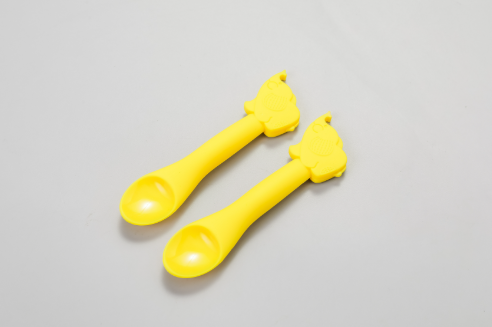
A complete
silicone molding service is far more than simply producing silicone parts. It is a fullcycle manufacturing solution that integrates engineering expertise, material science, tooling design, production management, and quality assurance into a single, reliable workflow.
Whether a project requires highperformance components, rapid prototyping, or scalable production, a professional silicone molding service ensures that every stage—from concept to finished part—is optimized for performance, cost, and lead time.
In today’s competitive manufacturing environment, companies rely on partners who can deliver:
- Technical guidance
- Flexible production capacity
- Reliable quality control
- Costeffective tooling
- Fast development cycles
This is where a complete silicone molding service becomes a strategic advantage.
What Defines a Complete Silicone Molding Service?
A true endtoend silicone molding service includes five core pillars:
Engineering Consultation and Feasibility Analysis
Before production begins, engineers evaluate:
- Part geometry
- Material requirements
- Tolerance expectations
- Production volume
- Regulatory constraints
This ensures the correct molding method—such as
silicone compression molding—is selected from the start.
Material Selection and Performance Matching
A professional service provider helps customers choose the right silicone grade:
- HTV silicone
- LSR silicone
- Medicalgrade silicone
- Foodgrade silicone
- Hightemperature silicone
Each material offers different mechanical, thermal, and chemical properties.
Tooling Design and Optimization
Tooling is the foundation of part quality. A complete service includes:
- Mold flow analysis
- Parting line optimization
- Venting strategy
- Insert design
- Mold steel selection
Production Execution
Depending on the project requirements, production may use:
- Silicone compression molding
- Transfer molding
- LSR injection molding
- Low volume silicone molding for prototypes or small batches
Quality Control and Post-processing
A complete service includes:
- Dimensional inspection
- Compression set testing
- Tear strength verification
- Flash trimming
- Postcuring
- Packaging and logistics
Choosing the Right Silicone Molding Method:A ServiceDriven Approach
A professional
silicone molding service does not force a single method—it recommends the best method based on the project.
When to Use Silicone Compression Molding
Best for:
- Large parts
- Thickwall structures
- Highperformance sealing components
- Lowtomedium production volume
This method offers stable curing and excellent material integrity.
When to Use LSR Injection Molding
Best for:
- Highvolume production
- Microfeatures
- Tight tolerances
- Automated manufacturing
When to Use Low Volume Silicone Molding
Best for:
- Prototypes
- Pilot runs
- Market testing
- Custom components
This method minimizes tooling cost and accelerates development.
Service Workflow:How a Professional Silicone Molding Service Operates
A complete silicone molding service follows a structured workflow to ensure predictable results.
Step 1:Project Intake and Requirement AnalysisThe service team gathers:
- 3D files
- Material specifications
- Performance requirements
- Production volume
- Budget and timeline
Step 2:DFM (Design for Manufacturability)
Engineers evaluate:
- Wall thickness
- Draft angles
- Undercuts
- Venting needs
- Parting line placement
Step 3:Tooling Design and Fabrication
Tooling is designed to balance:
- Cost
- Durability
- Cycle time
- Part quality
Step 4:Trial Production and Optimization
A T0 or T1 sample run validates:
- Material flow
- Curing behavior
- Dimensional accuracy
- Surface finish
Step 5:Mass Production or LowVolume Production
Depending on the project:
- Compression molding for large parts
- LSR injection for highvolume
- Low volume molding for prototypes
Step 6:Quality Control and Delivery
QC ensures:
- Dimensional consistency
- Mechanical performance
- Visual inspection
- Packaging integrity
Quality Control Checklist
|
Inspection Item
|
Purpose
|
Notes
|
|
Durometer Test
|
Verify hardness
|
Ensures material consistency
|
|
Dimensional Check
|
Confirm tolerances
|
Critical for sealing parts
|
|
Flash Inspection
|
Evaluate mold fit
|
Indicates tooling condition
|
|
Post‑Curing Verification
|
Ensure full crosslinking
|
Required for medical‑grade silicone
|
Key Advantages of a Professional Silicone Molding Service
One-stop Solution
Customers avoid managing multiple suppliers for:
- Tooling
- Production
- QC
- Logistics
Faster Time to Market
Integrated workflows reduce:
- Lead time
- Communication delays
- Design iteration cycles
Lower Total Cost of Ownership
A complete service optimizes:
- Tooling cost
- Scrap rate
- Production efficiency
- Inventory management
Engineering Driven Quality
Professional service providers ensure:
- Stable curing
- Accurate dimensions
- Reliable sealing performance
- Longterm durability
Industry Applications:Where Silicone Molding Service Delivers Value
Medical and Healthcare
- Sealing components
- Softtouch interfaces
- Biocompatible parts
Automotive and EV
- Gaskets
- Vibrationcontrol components
- Hightemperature seals
Consumer Electronics
- Buttons
- Protective covers
- Shockabsorbing parts
Industrial Machinery
- Custom sealing solutions
- Highperformance insulation parts
Case Study:How a Complete Silicone Molding Service Reduced Development Time by 40%
A client developing a new wearable device required:
- Softtouch silicone components
- Tight tolerances
- Skinsafe materials
- Rapid iteration
Challenges
- Design still evolving
- Multiple prototypes required
- Tight launch schedule
Solution
The silicone molding service provided:
- DFM optimization
- Rapid tooling
- Low volume silicone molding for prototypes
- Compression molding for final production
Outcome
- 40% faster development cycle
- 30% lower tooling cost
- Zero designrelated delays
Why Silicone Molding Service Is a Strategic Advantage for Modern Companies
A complete silicone molding service provides:
- Engineering expertise
- Flexible production capacity
- Reliable quality control
- Costeffective tooling
- Faster development cycles
It enables companies to innovate faster, reduce risk, and deliver highperformance silicone components with confidence.
FAQs
What silicone molding processes do manufacturers typically offer?
Providers commonly offer compression molding, transfer molding, and LSR injection molding to support different volumes and precision levels.
How do I choose the right silicone molding process?
Selection depends on part complexity, volume, tolerance requirements, material grade, and budget.
What industries rely heavily on silicone molding services?
Medical devices, consumer electronics, automotive sealing, industrial equipment, and wearable products all rely on molded silicone components.
What quality controls are used in silicone molding?
Common controls include durometer testing, dimensional inspection, flash evaluation, tensile testing, and post‑curing verification.
Can silicone molding support colored or translucent parts?
Yes. Pigments can be mixed into the silicone compound, and translucent or transparent grades are available for optical or aesthetic applications.
What factors influence lead time for silicone molding projects?
Tooling complexity, material availability, part size, curing cycle time, and required certifications all affect lead time.
Conclusion
A professional silicone molding service is more than a manufacturing option—it is a strategic partner that helps companies accelerate development, reduce cost, and achieve consistent product quality. Whether the project requires silicone compression molding, low volume silicone molding, or a fully customized solution, a complete service ensures that every stage of production is optimized for performance and efficiency.
Authoritative Sources:
1. Enhanced Low-Density Silicone Foams – NIH / NLM
https://www.ncbi.nlm.nih.gov/pmc/articles/PMC10675139/
2. Polymer Advanced Manufacturing and Rheology – NIST (.gov)
https://www.nist.gov/programs-projects/polymer-advanced-manufacturing-and-rheology
3. Modeling Polymers for Next-Generation Manufacturing – DOE (.gov)
https://www.energy.gov/science/articles/modeling-polymers-next-generation-manufacturing-and-sustainability
4. Plastics Molding and Forming Effluent Guidelines – EPA (.gov)
https://www.epa.gov/effluent-guidelines/plastics-molding-and-forming-effluent-guideline
5. Injection Molding Handbook (3rd Edition)
https://patentscope.wipo.int/search/en/detail.jsf?docId=WO2000049946


