Custom Silicone Rubber Parts: Design, Material Selection, and Manufacturing Insights for High-Performance Applications
Why Custom Silicone Rubber Parts Are Critical for High-Performance Applications
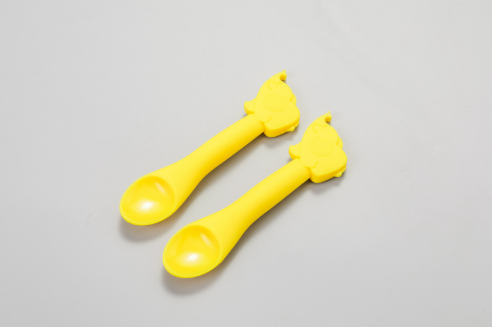 Industries increasingly rely on custom silicone rubber parts to meet demanding performance requirements in sealing, insulation, vibration control, and fluid handling. Standard components cannot always address unique geometry, tolerance, hardness, or environmental constraints. Custom parts bridge this gap by combining design flexibility with material tailoring and process optimization.
The value of custom silicone rubber parts is not limited to geometry. Behavioral properties such as compression set, thermal stability, and chemical resistance are equally important. These characteristics are determined by both material formulation and manufacturing method, especially silicone rubber compression molding. When engineers understand the relationship between design, material, and process, they can produce parts that perform reliably under real-world conditions.
What Defines a High-Quality Silicone Part
A high-quality silicone rubber molded part is defined by multiple performance dimensions, not just dimensional accuracy. Quality emerges from the interaction of material, design, and manufacturing control.
Key performance criteria include:
-
Dimensional stability
Parts must maintain geometry under load, temperature, and time.
-
Elastic recovery
Good return to original shape after compression ensures long-term sealing performance.
-
Thermal resistance
Silicone typically performs from −55°C to +230°C, depending on formulation.
-
Sealing performance
Compression set and surface finish directly affect leak resistance.
For custom silicone rubber parts, each application demands a different balance of these properties. Medical seals prioritize biocompatibility and low compression set. Automotive components emphasize thermal and chemical resistance. Electronics parts focus on insulation and environmental stability.
Material Selection Strategy for Custom Silicone Parts
Material choice is the foundation of part performance. Silicone families include VMQ (polymethylsiloxane), LSR (liquid silicone rubber), and HCR (high-consistency rubber). Each has distinct processing behavior and property profiles.
-
VMQ
Widely used for general compression molding; good thermal stability and moderate mechanical strength.
-
LSR
Ideal for injection molding and high-precision parts; excellent flow and low compression set.
-
HCR
Used for high-stress applications; superior mechanical properties and durability.
Hardness selection (Shore A) is equally critical. Typical ranges:
-
Soft seals: 30–50 Shore A
-
General seals: 50–70 Shore A
-
Rigid components: 70–90 Shore A
For medical and food-grade parts, formulation must meet FDA or ISO 10993 requirements. Engineers often specify low compression set, low extractables, and defined biocompatibility.
Design for Silicone Compression Molding
Design directly influences manufacturability and performance. When using silicone rubber compression molding, engineers must adapt geometry to process constraints.
Critical design factors:
-
Wall thickness
Avoid abrupt changes; uniform thickness reduces shrinkage and internal stress.
-
Draft angles
Provide sufficient angles for easy part removal and reduce mold wear.
-
Tolerance logic
Silicone is inherently less precise than metal; typical tolerances are ±0.1–0.3 mm depending on geometry.
-
Flow and venting
Proper venting prevents trapped air and reduces bubble defects.
-
Corners and ribs
Rounded corners reduce stress concentration; ribs improve stiffness without excessive thickness.
These design rules are essential for low-volume silicone molding, where optimization cycles are limited and part quality must be high from the first batch.
Manufacturing Routes Comparison
Different molding processes offer different trade-offs. Engineers must choose between compression, injection, and transfer molding based on part complexity, volume, and cost.
Comparison Table: Manufacturing Process Options
|
Attribute
|
Compression Molding
|
Injection Molding
|
Transfer Molding
|
|
Tooling Cost
|
Low
|
High
|
Medium
|
|
Lead Time
|
Short
|
Long
|
Medium
|
|
Precision
|
Medium
|
High
|
Medium–High
|
|
Volume Suitability
|
Low–Medium
|
High
|
Medium
|
|
Design Complexity
|
Medium
|
High
|
Medium–High
|
|
Material Waste
|
Higher
|
Lower
|
Medium
|
Compression molding is especially suitable for custom silicone rubber parts with moderate complexity and low-to-medium volumes. It provides flexibility for material changes and rapid tooling adjustments.
Parameter Table: Custom Silicone Rubber Parts Design Parameters
|
Parameter
|
Typical Range
|
Notes
|
|
Hardness (Shore A)
|
30–90
|
Choose based on sealing vs structural needs
|
|
Wall Thickness (mm)
|
0.5–5.0
|
Uniform thickness reduces defects
|
|
Tolerance (±mm)
|
0.1–0.3
|
Depends on geometry and size
|
|
Thermal Range (°C)
|
−55 to +230
|
Formulation-dependent
|
|
Seal Pressure (MPa)
|
0.1–2.0
|
Based on application pressure
|
These parameters serve as starting points for design. Final values depend on material selection, mold design, and process control.
Low Volume vs Mass Production: Strategic Considerations
Low-volume silicone molding is not simply a costlier version of mass production. It represents a different manufacturing strategy focused on flexibility, speed, and risk reduction.
For custom silicone rubber parts, low-volume production is ideal for:
-
Prototyping and design validation
-
Limited-run medical or automotive components
-
Customized industrial parts
-
Rapid iteration before mass production
Advantages include:
-
Lower tooling investment
-
Faster lead time
-
Flexible material changes
-
Reduced inventory risk
Disadvantages include:
-
Higher per-part cost
-
Limited automation
-
Less predictable yield in early batches
A silicone molding service provider experienced in low-volume production can optimize tooling and process to minimize these disadvantages.
Typical Application Scenarios
Custom silicone rubber parts are used across multiple industries, each with unique performance requirements.
-
Automotive seals
Require high thermal resistance, chemical stability, and long service life.
-
Medical components
Must meet biocompatibility standards, low compression set, and low extractables.
-
Electronics insulation
Need high dielectric strength, environmental stability, and flame resistance.
-
Food-grade parts
Require FDA compliance, cleanability, and resistance to oils and cleaning agents.
For silicone rubber molded parts used in these applications, the combination of correct material, optimized design, and proper compression molding ensures long-term reliability.
Case Study: Medical Seal Development
A medical device manufacturer required a custom silicone seal for a fluid-handling system. Initial prototypes showed dimensional instability and material aging after repeated sterilization cycles.
Problem:
-
Dimensional deviation ±0.4 mm
-
Compression set >15%
-
Surface cracking after sterilization
Solution:
-
Switched to VMQ formulation with low compression set
-
Optimized wall thickness and draft angles
-
Used silicone rubber compression molding with controlled temperature and pressure
-
Implemented post-cure treatment
Result:
-
Dimensional stability improved to ±0.12 mm
-
Compression set reduced to 6%
-
No surface cracking after 50 sterilization cycles
-
Cost reduced by 18% due to improved yield
Client Testimonial: Medical Industry Feedback
"The custom silicone seals delivered consistent performance across multiple sterilization cycles. Dimensional stability and material quality were excellent. The supplier's low-volume silicone molding service allowed rapid iteration without compromising quality."
— Engineering Manager, Medical Device Manufacturer
Common Manufacturing Challenges
Even with good design and material selection, several challenges can occur during production.
Common issues include:
-
Bubbles
Caused by trapped air or insufficient venting.
-
Contraction / Shrinkage
Uneven thickness leads to dimensional variation.
-
Mold contamination
Residual material affects surface quality.
-
Dimensional deviation
Process parameter variation or improper post-cure.
Understanding these challenges helps engineers work more effectively with a silicone molding service provider to prevent defects early.
FAQs
1. What is the best process for silicone rubber molded parts?
For moderate complexity and low-to-medium volumes, silicone rubber compression molding is often optimal due to lower tooling cost and flexibility.
2. How to choose hardness for custom silicone rubber parts?
Choose softer materials (30–50 Shore A) for flexible seals, and harder materials (70–90 Shore A) for structural components.
3. Is compression molding suitable for complex parts?
Compression molding supports moderate complexity. For highly complex geometry, injection molding may be more suitable.
4. What is typical lead time for custom silicone parts?
Prototypes typically take 7–14 days; mass production depends on tooling and volume.
5. Can silicone parts meet FDA standards?
Yes, with appropriate formulation and compliance testing.
Why Choose Nice Rapid Tooling for Custom Silicone Rubber Parts and Compression Molding
Nice Rapid Tooling specializes in high-performance custom silicone rubber parts for medical, automotive, and electronics applications, with strong engineering support for silicone rubber compression molding and low-volume silicone molding service. The company provides:
-
Tailored material selection (VMQ, LSR, HCR) matched to application requirements
-
Precision mold design optimized for compression molding geometry and tolerances
-
Controlled process parameters for temperature, pressure, cure time, and post-cure
-
Rigorous quality control including dimensional inspection, compression set testing, and surface evaluation
-
Flexible low-volume production with rapid iteration and fast lead time
For customers needing custom silicone rubber parts with strict performance criteria, Nice Rapid Tooling delivers consistent quality, reliable delivery, and engineering transparency across prototype and production stages.
Authoritative Sources
18.2 Compression Molding
https://books.byui.edu/plastics_materials_a/compression_molding
Silicone Rubber—New Properties for Design Engineers
https://asmedigitalcollection.asme.org/fluidsengineering/article/70/7/831/1152911/Silicone-Rubber-New-Properties-for-Design
Chemistry Recommendations for Submissions of Food Contact Substances
https://www.fda.gov/regulatory-information/search-fda-guidance-documents/guidance-industry-preparation-premarket-submissions-foo
Physical Properties of Silicone Rubber
https://www.oandplibrary.org/al/1968_01_035.asp
Temperature and Moisture Effects on the Engineering Properties of Structural Silicone Sealants
https://store.astm.org/stp26803s.html


