Silicone Compression Molding — Engineering Principles, Material Behavior, and Process Optimization
Why Silicone Compression Molding Remains a Core Industrial Process
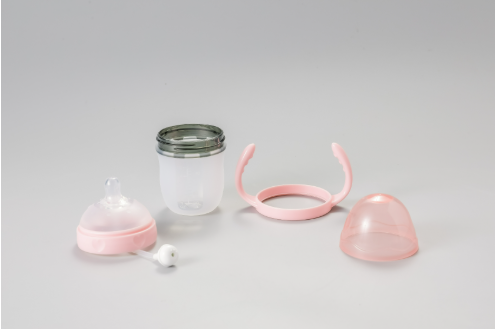 Silicone compression molding
 is one of the most mature and reliable manufacturing processes for producing highperformance silicone components. Despite the rise of LSR injection molding and automated production systems, compression molding continues to dominate applications that require large parts, thick-wall structures, and stable mechanical performance.
As part of a broader silicone molding service ecosystem, compression molding offers a unique balance of material flexibility, tooling simplicity, and predictable curing behavior. In many industrial environments,
silicone rubber compression molding remains the preferred method when engineers need to control material flow, optimize curing uniformity, or manage complex geometries that are unsuitable for highpressure injection.
Material Science Behind Silicone Compression Molding
Silicone Material Behavior Under Heat and Pressure
Compression molding relies on the predictable curing behavior of solid silicone rubber (HTV). Unlike LSR, which is injected in liquid form, HTV silicone begins as a preformed slug or sheet. When placed into a heated mold cavity, the material undergoes:
- Thermal softening
- Crosslinking reaction
- Volatile release
- Dimensional stabilization
The curing reaction is driven by temperature and pressure, making the process highly dependent on:
- Mold temperature uniformity
- Material preform shape
- Pressure distribution
- Venting efficiency
Why HTV Silicone Works Well in Compression Molding
HTV silicone offers:
- High tear strength
- Excellent compression set resistance
- Stable mechanical properties
- Superior thermal resistance
- Strong sealing performance
These characteristics make it ideal for:
- Gaskets
- Vibrationcontrol components
- Hightemperature seals
- Industrial insulation parts
Engineering Workflow:How Silicone Compression Molding Works
PreForm Preparation
The process begins with cutting or shaping silicone into a preform that approximates the final part volume. Engineers must consider:
- Material shrinkage
- Flash allowance
- Flow path length
- Cavity fill ratio
A welldesigned preform reduces:
- Air entrapment
- Flow marks
- Incomplete filling
- Excessive flash
Mold Heating and Material Placement
The mold is heated to a controlled temperature, typically between 150–200°C depending on:
- Silicone grade
- Part thickness
- Required curing time
The preform is placed manually or automatically into the cavity.
Compression and Curing
Once the mold closes, pressure is applied to force the silicone to flow and fill the cavity. Engineers must optimize:
- Clamp force
- Pressure ramp rate
- Curing time
- Venting channels
Demolding and Post‑curing
After curing, the part is removed and may undergo:
- Flash trimming
- Post‑curing (for medical or foodgrade silicone)
- Surface finishing
- Dimensional inspection
Engineering Design Guidelines for CompressionMolded Silicone Parts
Wall Thickness and Flow Path
Compression molding is ideal for:
- Thick-wall parts
- Large crosssections
- Long flow paths
Engineers should avoid:
- Extremely thin walls (<0.8 mm)
- Sharp transitions
- Undercuts without inserts
Draft Angles and Parting Lines
To ensure smooth demolding:
- Use 1–3° draft angles
- Position parting lines away from sealing surfaces
- Avoid deep ribs without venting
Venting Strategy
Proper venting prevents:
- Air traps
- Burn marks
- Incomplete filling
Vents typically range from 0.02–0.05 mm.
Benefits of Silicone Compression Molding from an Engineering Perspective
Superior Material Integrity
Because the process uses low shear forces, silicone retains:
- High tear strength
- Stable elasticity
- Uniform crosslinking
Ideal for Large or Thick-wall Components
Injection molding struggles with:
- Long flow paths
- High back pressure
- Thick sections
Compression molding handles these easily.
Lower Tooling Cost and Faster Fabrication
Compression molds:
- Require fewer components
- Have simpler runner systems
- Are easier to maintain
Excellent Dimensional Stability
The slow, uniform curing process reduces:
- Warpage
- Sink marks
- Internal stress
Common Defects and Engineering Solutions
Air Traps
Cause: Insufficient venting
Solution: Add microvents, adjust preform shape
Incomplete Filling
Cause: Preform too small or cold mold
Solution: Increase preform volume, raise mold temperature
Flashing
Cause: Excess material or low clamp force
Solution: Optimize preform weight, increase clamp tonnage
Surface Marks
Cause: Poor mold finish or trapped volatiles
Solution: Polish cavity, extend curing time
When to Choose Silicone Compression Molding
Compression molding is the best choice when:
- Part is large or thick
- Material requires low shear
- Production volume is low to medium
- Tooling budget is limited
- Sealing performance is critical
Industries that rely heavily on this process include:
- Automotive
- Industrial machinery
- Consumer electronics
- Medical devices
- Aerospace
Comparison with LSR Injection Molding
Compression Molding Advantages
- Better for large parts
- Lower tooling cost
- Handles thick-wall structures
- Less sensitive to material viscosity
Injection Molding Advantages
- Faster cycle time
- Higher automation
- Better for microfeatures
- Ideal for mass production
Quality Control in Silicone Compression Molding
Key QC checkpoints include:
- Preform weight consistency
- Mold temperature uniformity
- Curing time accuracy
- Dimensional inspection
- Compression set testing
- Tear strength verification
Lead Time and Cost Structure
Compression molding offers:
- Shorter tooling lead time
- Lower mold cost
- Predictable curing cycles
- Stable production scheduling
It is especially costeffective for:
- Lowvolume production
- Large components
- Customized geometries
Compression Molding vs LSR Injection Molding
|
Parameter
|
Compression Molding
|
LSR Injection Molding
|
|
Tooling Cost
|
Low
|
High
|
|
Part Complexity
|
Low–Medium
|
High
|
|
Cycle Time
|
Longer
|
Shorter
|
|
Best For
|
Thick‑wall / large parts
|
Precision micro‑features
|
|
Material Type
|
HTV Silicone
|
LSR (Liquid Silicone Rubber)
|
Case Study:Large Industrial Gasket
A client required a large, thick-wall silicone gasket with high sealing performance. LSR injection molding was unsuitable due to:
- Long flow path
- High back pressure
- Risk of incomplete filling
Compression molding delivered:
- Uniform curing
- Stable sealing performance
- Lower tooling cost
- Faster development cycle
FAQs
What materials are suitable for silicone compression molding?
Solid silicone rubber (HTV), fluorosilicone, and high‑temperature elastomers are commonly used due to their stability and predictable curing behavior.
What part geometries benefit most from compression molding?
Thick‑wall parts, large components, and designs with low‑to‑medium complexity benefit most because the process supports uniform curing and low tooling cost.
How accurate are compression‑molded silicone parts?
Tolerances are looser than LSR injection molding, but precision improves with optimized mold temperature, pressure, and venting.
What is the typical curing time for compression molding?
Curing time depends on part thickness, silicone grade, and mold temperature. Thick‑wall parts require longer cycles due to slower heat penetration.
Is compression molding suitable for medical‑grade silicone?
Yes. Many medical‑grade HTV silicones are designed for compression molding when proper post‑curing and contamination control are applied.
What are the main cost drivers in compression molding?
Tooling material, cavity count, part size, curing time, and manual labor requirements are the primary cost factors.
Conclusion
Silicone compression molding remains a cornerstone of industrial silicone manufacturing. Its ability to handle large, thick-wall, and highperformance components makes it indispensable across multiple industries. As part of a complete silicone molding service, it provides engineers with a reliable, costeffective, and technically robust solution for demanding applications.
Authoritative Sources:
1. MIT – Department of Materials Science and Engineering (.edu)
“Mechanical Behavior of Polymers”
https://ocw.mit.edu/courses/3-064-polymer-engineering-fall-2003/pages/lecture-notes/
2. University of Wisconsin–Madison – Polymer Processing (.edu)
“Polymer Processing: Compression Molding Overview”
https://polymer.engr.wisc.edu/compression-molding/
3. U.S. Food & Drug Administration (FDA) – Medical Silicone Materials (.gov)
“Silicone Elastomers in Medical Devices”
https://www.fda.gov/medical-devices/materials/medical-device-materials-silicone-elastomers
4. NASA Technical Reports Server – Silicone Elastomer Curing Behavior (.gov)
“Thermal and Mechanical Properties of Silicone Elastomers”
https://ntrs.nasa.gov/citations/19720022644
5. Journal of Applied Polymer Science – High DA Publication
“Curing Kinetics of Silicone Rubber Compounds”
https://onlinelibrary.wiley.com/doi/10.1002/app.48123


