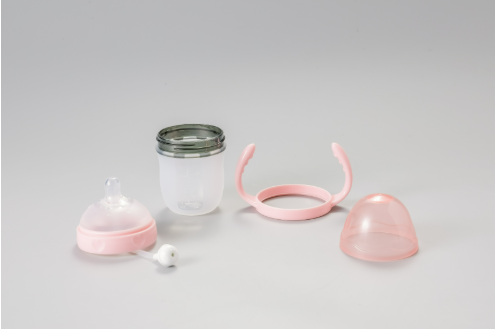
 The performance gap between silicone rubber molded parts from different manufacturers often stems not from mold precision but from material formulation and processing behavior. Two parts with identical geometry can exhibit vastly different compression set, thermal stability, and chemical resistance due to differences in polymer structure, cross-linking density, and additive systems.
Material science is the foundation of part quality. Engineers must understand how molecular structure translates to macroscopic properties, and how manufacturing methods like silicone compression molding affect final performance. This knowledge enables better selection of materials, processes, and silicone molding service providers for high-reliability applications.
Silicone elastomers fall into three primary categories, each with distinct processing characteristics and property profiles.
Selection depends on application requirements. Medical seals prioritize low compression set and biocompatibility. Automotive components emphasize thermal and chemical resistance. Electronics parts focus on dielectric strength and environmental stability.
Performance is quantified through standardized mechanical and environmental tests. Understanding these metrics helps engineers specify appropriate materials and validate supplier capabilities.
Critical performance indicators include:
| Property | VMQ | LSR | HCR |
|---|---|---|---|
| Curing Method | Heat (compression) | Platinum cure (injection) | Heat (compression/injection) |
| Tensile Strength (MPa) | 6–12 | 8–14 | 10–15 |
| Elongation at Break (%) | 250–500 | 300–600 | 200–450 |
| Compression Set (%) | 8–15 | 3–8 | 5–12 |
| Thermal Range (°C) | −55 to +230 | −55 to +230 | −55 to +250 |
| Typical Application | General seals | High-precision parts | High-stress components |
LSR offers the lowest compression set, making it ideal for medical and food-grade sealing. VMQ provides cost-effective performance for general industrial applications. HCR delivers superior mechanical strength for demanding environments.
| Parameter | Typical Range | Notes |
|---|---|---|
| Tensile Strength (MPa) | 6–15 | Depends on material type (VMQ/LSR/HCR) |
| Elongation at Break (%) | 200–600 | Higher values indicate greater flexibility |
| Compression Set (%) | 3–15 | Critical for sealing performance; lower is better |
| Thermal Range (°C) | −55 to +230 | Specialized formulations up to +300°C |
| Shore A Hardness | 30–90 | Select based on sealing vs structural needs |
These values represent industry-standard ranges. Specific formulations may exceed or fall below these ranges depending on additives and cross-linking density.
The manufacturing process significantly influences final material behavior. Silicone compression molding, injection molding, and transfer molding each impart different stress patterns, cross-linking uniformity, and surface characteristics.
In silicone compression molding:
Proper processing ensures uniform cross-linking, minimizes internal stress, and achieves target mechanical properties. Poor process control leads to defects such as bubbles, uneven hardness, or excessive compression set.
Real-world applications expose silicone rubber molded parts to thermal, chemical, and mechanical stresses. Material selection must account for these conditions.
Critical environmental factors include:
For low volume silicone molding applications where material changes are frequent, selecting formulations with broader environmental tolerance reduces risk during prototyping and validation.
An automotive manufacturer experienced seal failure in an engine-component application operating at 180°C. Original VMQ seals showed compression set exceeding 20% after 500 hours, leading to leakage.
Problem:
Solution:
Result:
This case demonstrates how material selection and process optimization directly impact long-term performance of silicone rubber molded parts.
"The HCR seals we received from Nice Rapid Tooling performed exceptionally in our high-temperature engine application. Compression set stayed below 8% after extended thermal cycling, and we saw zero leakage in field testing. Their silicone molding service team provided excellent material guidance and process control."
— Senior Engineer, Automotive Component Manufacturer
Even experienced engineers make errors when specifying silicone materials. Understanding these pitfalls helps avoid costly redesigns.
Common mistakes include:
Working with an experienced silicone molding service provider helps avoid these mistakes through material testing, application review, and process optimization.
HCR offers the highest thermal stability (up to +250°C), while specialized VMQ formulations can reach +300°C. For applications above 230°C, request high-temperature formulations.
Compression set measures permanent deformation after compression. High compression set (>15%) leads to seal leakage over time. Low compression set (<10%) ensures long-term sealing integrity.
LSR has low viscosity for injection molding and offers very low compression set. HCR has higher consistency for compression molding and provides superior mechanical strength.
For flexible seals, select 30–50 Shore A. For general seals, 50–70 Shore A is typical. For rigid components requiring structural support, use 70–90 Shore A.
Yes, with appropriate formulation. Medical-grade silicone meets ISO 10993 biocompatibility requirements. Food-grade silicone meets FDA 21 CFR 177.2600 compliance.
Choosing a silicone molding service provider is critical for achieving target material properties and performance. The right partner provides material expertise, process control, and quality validation.
Nice Rapid Tooling specializes in high-performance silicone rubber molded parts for medical, automotive, and electronics applications, with strong engineering support for material selection, silicone compression molding processes, and low volume silicone molding capabilities. The company offers:
For customers requiring silicone rubber molded parts with strict performance criteria, Nice Rapid Tooling delivers consistent material properties, reliable delivery, and engineering transparency across prototype and production stages.
Silicone Rubber—New Properties for Design Engineers
https://asmedigitalcollection.asme.org/fluidsengineering/article/70/7/831/1152911/Silicone-Rubber-New-Properties-for-Design
Physical Properties of Silicone Rubber
https://www.oandplibrary.org/al/1968_01_035.asp
Temperature and Moisture Effects on the Engineering Properties of Structural Silicone Sealants
https://store.astm.org/stp26803s.html
Casting — UC Davis Tech Foundry
https://techfoundry.ucdavis.edu/casting
Guidance for Industry: Preparation of Premarket Submissions for Food Contact Substances — Chemistry Recommendations
https://www.fda.gov/regulatory-information/search-fda-guidance-documents/guidance-industry-preparation-premarket-submissions-foo