Liquid silicone rubber (LSR) is used to manufacture flexible components for medical devices, automotive systems, electrical equipment, and consumer products. Its combination of elasticity, temperature resistance, and molding capabilities makes it a useful option for many demanding applications.
However, LSR is not a single material with identical properties across every grade. Choosing a suitable formulation requires a clear understanding of the part's function, operating environment, and manufacturing requirements.
For an overview of its processing benefits, read our article on why use liquid silicone rubber in injection molding.
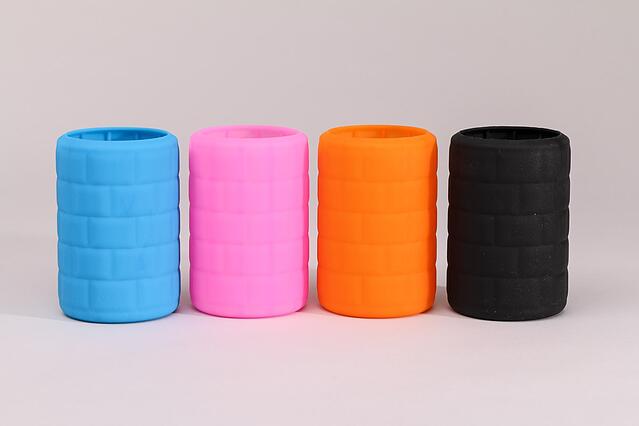
LSR is typically supplied as a two-component material that is metered, mixed, and injected into a heated mold. Many injection-molding grades use a platinum-catalyzed curing system that converts the liquid material into a crosslinked silicone elastomer.
Once cured, the material does not remelt like a thermoplastic. Nevertheless, it can degrade when exposed to conditions beyond its specified operating limits.
Controlled material dosing and molding conditions can support repeatable production. Final part quality also depends on mold design, venting, curing conditions, and appropriate inspection.
Many LSR grades maintain useful flexibility at low temperatures and resist heat and aging at elevated temperatures. These characteristics can be valuable for seals, protective components, and parts exposed to changing operating conditions.
The allowable temperature range depends on the selected grade, exposure duration, mechanical loading, and surrounding environment. Check the material data sheet rather than assuming that any silicone can withstand unlimited heat or cold.
LSR is available in grades with different hardness, elongation, tensile strength, and tear resistance. This allows designers to select materials for soft-touch components, flexible membranes, seals, and other elastic parts.
These properties must be considered together. A softer material is not necessarily the best choice for every seal, and high elongation alone does not establish resistance to tearing.
For sealing applications, also evaluate compression set and elastic recovery under the intended operating conditions.
Selected medical-grade LSR materials are supplied with biocompatibility test information and can be suitable for specific medical-device applications.
However, a material's test results do not automatically establish the suitability of every finished device. The intended contact type and duration, processing conditions, additives, and final component must be considered.
Learn more about liquid silicone rubber molding for medical applications.
Depending on the grade and application, silicone components may be compatible with sterilization methods such as steam, ethylene oxide, or radiation.
The chosen method and number of sterilization cycles should be validated for the finished component. Repeated exposure can affect material properties, so compatibility should not be assumed from the material name alone.
Silicone elastomers can offer useful resistance to weathering, ozone, and selected chemicals. However, chemical compatibility depends on the formulation, substance, concentration, temperature, and exposure time.
Standard LSR should not be assumed suitable for every fuel, oil, solvent, acid, or alkali. Specialized fluorosilicone grades may be considered where improved resistance to certain fuels and oils is required.
Many LSR grades provide electrical insulating properties, making them useful for selected electrical protection and insulation applications.
Material selection should account for the required dielectric performance, temperature, moisture exposure, and relevant application standards. Specialized formulations are available, and not every silicone grade has the same electrical characteristics.
Some LSR grades are transparent or translucent, while others are formulated for specific optical or functional requirements. Compatible pigments can be used to produce colored components.
If transparency, color consistency, or optical performance is important, define those requirements before material selection. Pigments and additives should also be reviewed for compatibility with the intended application.
These examples describe potential applications, not universal approvals. Each project requires a suitable material grade and validation against its specific requirements.
Before requesting a quotation, define the conditions the finished part must withstand. Useful information includes:
Also confirm whether the selected grade or application requires post-curing or other additional processing. These requirements can affect production planning, cost, and delivery.
LSR offers a useful combination of flexibility, thermal performance, and molding capabilities, but successful results depend on matching the formulation to the application.
Instead of selecting LSR based on general benefits alone, review the supplier's material data, manufacturing requirements, and any relevant test documentation. This helps establish realistic performance expectations before tooling and production begin.
NICE Rapid can review your drawings and application requirements for an LSR injection molding project. Include your target quantity, material or hardness requirements, operating conditions, and any necessary compliance documentation.
Request an LSR injection molding quote or email enquiry@nice-rapidtooling.com with your project details.
Original article source: Liquid Silicone Rubber: Providing Solutions and New Opportunities in Today's Industry.


