Developing custom silicone rubber parts is not a single-step engineering task. It is a multi-stage process that involves design validation, material selection, process choice, and production planning. Each stage introduces its own constraints, and decisions made early in the process often determine final cost, performance, and manufacturability.
Unlike standard components, custom silicone parts require alignment between design intent and manufacturing capability. Engineers must consider not only geometry and function, but also how the part will be molded, finished, and integrated into a final product. This article outlines a practical workflow for moving from concept to production, focusing on decision points rather than isolated techniques.
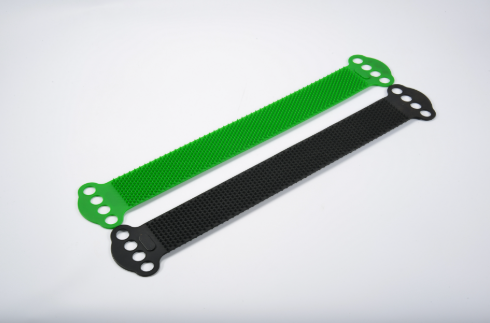
The development of custom silicone rubber parts should begin with function, not shape. Silicone is typically selected for its elasticity, thermal stability, sealing performance, or chemical resistance. These functional requirements define the design space before any CAD model is created.
At this stage, the key questions are:
Without clear answers to these questions, design decisions may lead to unnecessary complexity or material mismatch later in the process.
Once functional requirements are defined, the next step is translating them into geometry. This is where many issues begin, especially when designers treat silicone like rigid plastic.
Silicone behaves differently under load and during molding. Its elasticity allows deformation, but also introduces challenges in dimensional control.
Key design considerations include:
These decisions directly affect how the part will perform and how easily it can be manufactured.
Material selection is often treated as a secondary decision, but for silicone rubber molded parts, it is central to performance. Different silicone formulations offer different balances of hardness, elasticity, and durability.
Typical options include:
The choice depends on both functional requirements and manufacturing process. For example, silicone rubber compression molding typically uses solid silicone materials, while LSR injection molding requires liquid formulations.
Material choice also affects:
At this stage, design and material decisions must align with the manufacturing process. This is where many projects encounter trade-offs between cost, precision, and scalability.
For custom silicone rubber parts, the main process options include:
Compression molding is often preferred when:
LSR injection molding is preferred when:
This decision defines not only cost, but also development speed and flexibility.
Before moving to production, prototypes must be tested under real conditions. This stage is where design assumptions are validated or challenged.
In many projects, this involves:
Low volume silicone molding is often used here because it allows realistic parts to be produced without committing to full production tooling.
This stage is iterative. Design, material, and process may all be adjusted based on test results.
Once validation is complete, the focus shifts to production. At this stage, consistency becomes more important than flexibility.
Key considerations include:
The process may transition from compression molding to injection molding if volume increases, or remain in compression molding if flexibility and cost remain priorities.
Many issues in custom silicone rubber parts development are not caused by manufacturing defects, but by misaligned decisions earlier in the process.
Common problems include:
These issues often lead to rework, delays, or increased cost later in the project.
Custom silicone parts are rarely standalone products. They are usually part of larger assemblies, interacting with metal, plastic, or electronic components.
This means that design decisions must consider integration:
Ignoring these factors can lead to issues during assembly, even if the silicone part itself meets specifications.
Silicone offers flexibility, thermal stability, chemical resistance, and durability, making it suitable for a wide range of applications.
The choice depends on production volume, part complexity, and cost constraints. Compression molding is suitable for low to medium volumes, while LSR is better for high-volume production.
Yes. Overmolding and insert molding allow silicone to be integrated with other materials.
Tolerances are generally looser than for rigid plastics due to silicone’s elasticity, but can be controlled through design and process optimization.
Yes. Low volume silicone molding supports prototypes, pilot runs, and small batch production.
NICE Rapid Tooling Specialists provides integrated support for custom silicone rubber parts, covering design assistance, material selection, tooling, molding, and secondary processing. With more than 100 skilled staff and a team of experienced engineers, NICE supports projects from concept to low volume production and beyond.
The company offers capabilities including silicone compression molding, CNC machining, vacuum casting, and secondary operations such as painting, printing, and assembly. This integrated approach ensures that design intent, material performance, and manufacturing execution remain aligned throughout the development process.
Design Considerations for Elastomer Components – MIT Engineering Notes
https://ocw.mit.edu/elastomer-component-design-considerations
Material Selection for Silicone Applications – ASTM Engineering Guide
https://www.astm.org/material-selection-silicone-applications
Polymer Processing and Product Development – NIST Manufacturing Report
https://www.nist.gov/polymer-processing-product-development
Silicone Rubber Engineering Properties and Applications – ScienceDirect Review
https://www.sciencedirect.com/topics/materials-science/silicone-rubber-engineering-properties


